

Sara Jewellery needed a brand identity that could hold its own in a category where visual cues -- typography, materials, packaging weight -- do most of the persuading before a customer ever touches the product.
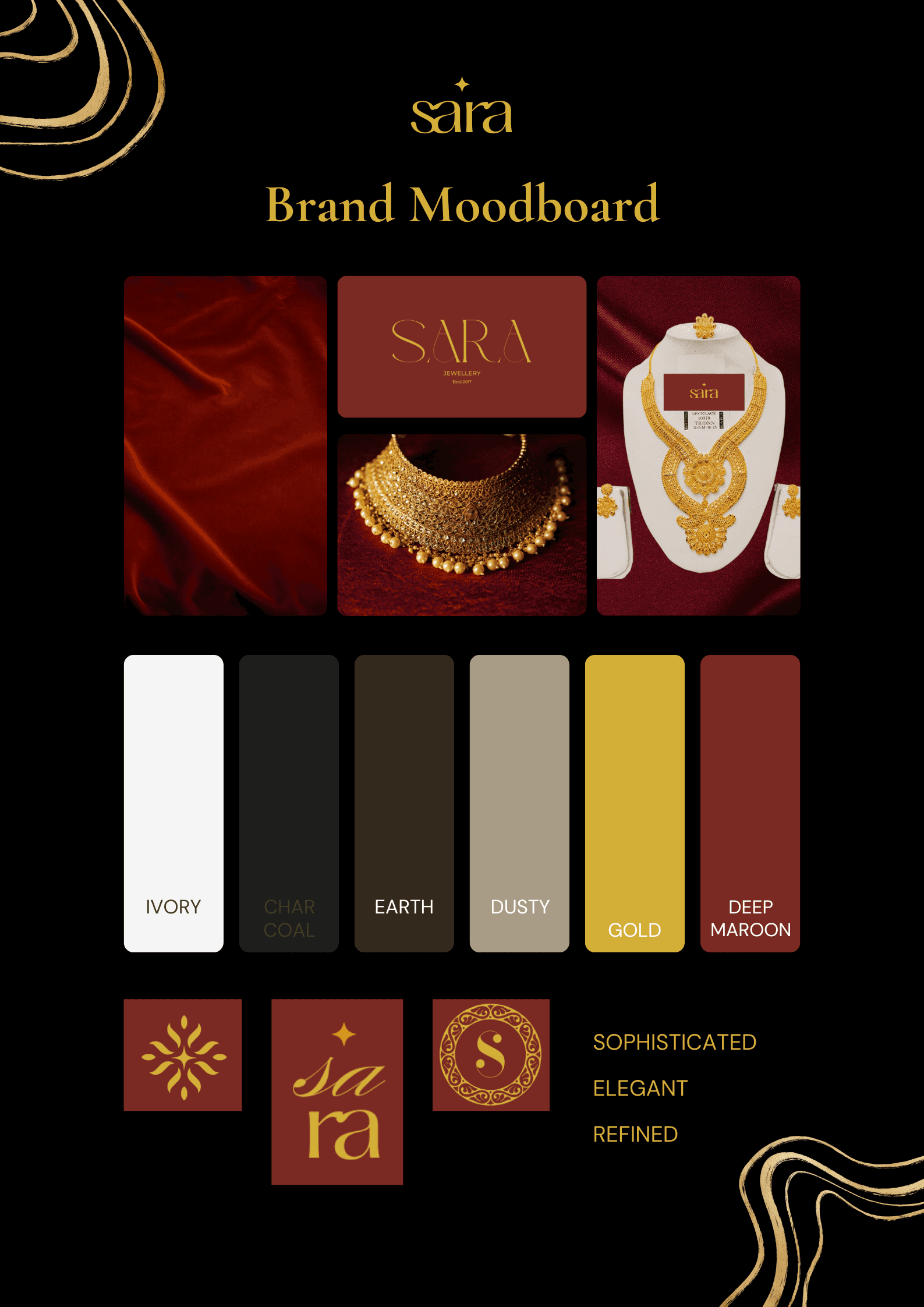
We built a logotype and mark refined enough to work at the scale of a single earring tag, then extended the same restraint into packaging and mockups so the unboxing experience carried the same quality signal as the jewellery itself.
We designed the logotype to work small before we designed it to work large.
Jewellery branding lives on tiny surfaces -- tags, clasps, the corner of a box. We started every exploration at the smallest realistic scale and only then checked it at billboard size, rather than the reverse, which is how most identities end up illegible on the one surface that matters most.
What we rejected: Jewellery branding lives on tiny surfaces -- tags, clasps, the corner of a box. We started every exploration at the smallest realistic scale and only then checked it at billboard size, rather than the reverse, which is how most identities end up illegible on the one surface that matters most.
We chose typography over an iconographic mark.
A distinctive wordmark ages better than an icon in jewellery, where trends in symbolism date quickly but a well-set typographic identity reads as established indefinitely. It also sidesteps the cliché diamond/gem icon every jewellery competitor reaches for first.
What we rejected: A custom gem or letterform icon mark. Common in the category to the point of genericness -- we judged it would blend in rather than stand out.




Luxury isn't about adding more—it's about removing everything unnecessary. ELM understood that immediately. Our collections finally feel as premium online as they do in person.
— Kamal Khaja, Founder, Sara Jewelry
We initially over-designed the packaging with a multi-layer unboxing sequence that looked spectacular in mockups and would have been expensive and slow to produce at Sara's actual order volumes. Scaling it back to a simpler, still-considered sequence was the right call, and we should have stress-tested production cost earlier in the process.
